
There’s a scene in the Nathan for You episode “Smokers Allowed” that I couldn’t stop thinking about while watching You Can See Everything. Nathan Fielder has an actress run a line with him: “I love you.” He gives her a performance note and then asks her to say it again. Then again. And again, maybe a dozen times, with Fielder looking more enthralled with every take.
It’s funny because it’s awkward, but it lands because something underneath it is probably real. Being convincingly told “I love you” by a beautiful woman feels good. Fielder takes that small, true feeling and stretches it into a prolonged, uncomfortable bit performed by a fictional version of himself, until you can’t tell where the real part ends.
In You Can See Everything, Fielder takes this bit much further. Co-directed by Fielder and Lance Oppenheim, the documentary follows Elizabeth Holmes through her final month before reporting to prison for a decade-long sentence. She invited a film crew into her home to document everything, and what they came away with is nearly three hours of something that rarely behaves like a documentary.

Most people familiar with its subject will walk in with one question: is Holmes lying? Deceiving her way to fame and fortune is what Holmes is most famously known for and what landed her behind bars, though she maintained her innocence throughout her trial. The film is happy to let you chase that question, but it isn’t interested in relitigating the exact facts of Theranos. It’s a character study rather than a fact-finding mission.
In a strange way, Holmes and Fielder both come across as real people playing carefully curated versions of themselves in You Can See Everything, and arguably the same character: earnest, a little wounded, emotionally available, a little out of sync with everyone else, and easy to underestimate. Holmes says she views the world differently than most people, and when Fielder plays her the “Who’s on First?” routine to prove a point about wordplay, he seems to agree, as the joke never lands with her. Fielder has built a career on that same out-of-sync feeling. It’s also clear that they are both probably the smartest person in any room they walk into. Watching them interact that way for a month, each with their own potential motives for what this documentary would really be, is the most unexpected chemistry I’ve seen on screen this year.
You Can See Everything opens with little preamble. Fielder, Oppenheim, and their crew are in the San Diego rental Holmes shares with her partner, Billy Evans, and their two young children, capturing small moments both intimate and banal leading up to her incarceration. At first the crew comes for the day and leaves at night, but Fielder suspects he’s being fed a performance that only has to hold up for a few hours at a time. So he takes Holmes up on an offer she’d made off camera: he and the crew will move in until she leaves. She agrees, vowing full transparency.
What follows is a psychological game. Holmes is disarmingly warm. Fielder openly admits he can’t square her claims of complete innocence with the facts of her case. Has she ever told a lie, he asks? No, not that she can remember, she answers, resolutely. Fielder can’t take that at face value, but the question under everything he asks is a different one: does she know she’s lying, or does she believe her own story? And Evans is perhaps the most confusing part of the mix: it’s unclear how the dynamics of the relationship between Holmes and Evans really work.
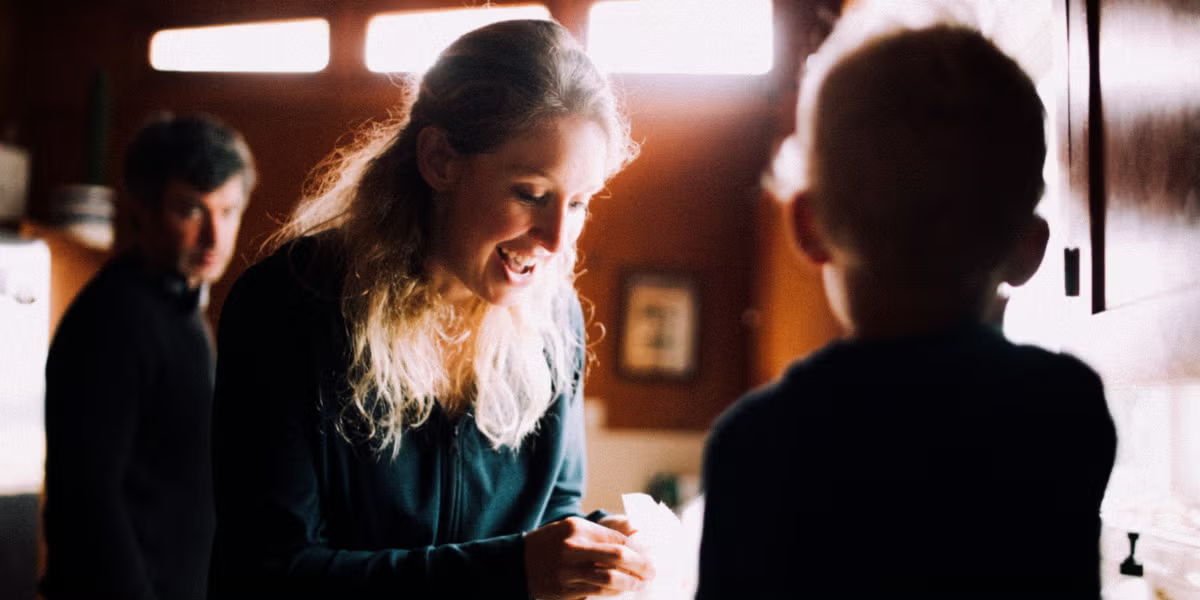
Is Holmes being manipulated by the men around her, or is she the one manipulating them? As Fielder warms to Holmes, and appears to develop something of a crush, he grows more suspicious of Evans and what looks like a dominating influence over her. (Appears is the most important word there, and we’ll come back to it.) That influence shows up in small ways: when Holmes is beating eggs, Evans takes the bowl from her and finishes the job himself, because he doesn’t like how she’s whipping them.
It’s hard not to look at this dynamic and think of Sunny Balwani, Holmes’ former partner and Theranos COO, whom her defense cast as the controlling figure behind her (a claim he denied). The film keeps circling the same question the trial did: when Holmes seems not to know something, is that real, or is not knowing part of how she stays innocent?
From the film’s first scenes, Evans and Holmes are already talking, unnervingly, about how to get back into business. Evans has since started Haemanthus, a diagnostics startup pitching a machine that analyzes blood, saliva, and urine samples. The company insists it’s not Theranos 2.0 and that Holmes has no involvement, though NPR’s sources say she’s been advising him from prison. Once again, it’s hard to say who’s steering whom.
None of this makes Holmes easy to dismiss. Whatever you believe about Theranos, it’s impossible not to feel for someone in her position: the mother of a baby only a few months old, still breastfeeding, packing up her life to say goodbye to her partner and children for the better part of a decade.
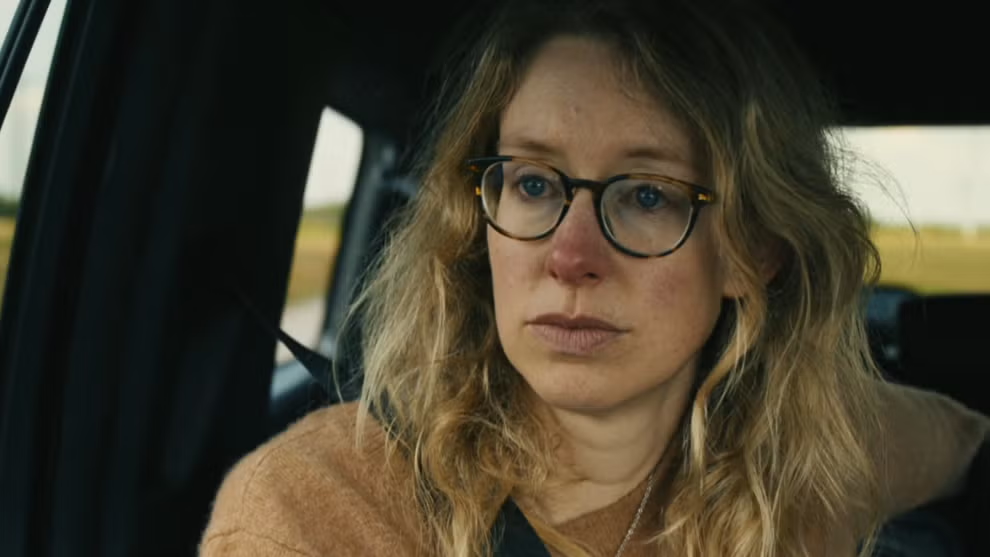
There’s another frame around all of this. Holmes has already been fictionalized, most famously in Hulu’s The Dropout, and she openly takes umbrage at how that series shaped the way people see her. She approached A24 about a documentary before Fielder and Oppenheim signed on. A month from prison, she seems less interested in setting the record straight on the facts of her trial than on the assumptions about her personality. So is You Can See Everything meant to correct the record, or to replace one fiction with another she has more control over?
The intimate footage I’ve described is compelling, but it isn’t what makes this the mind-bending experience people keep describing. Around the halfway mark, the film jumps forward two years. Fielder returns to his subjects with more distance, and the question shifts from what Holmes and Evans did that month to why they agreed to be filmed at all. That half is full of surprises, so I’ll say as little about it as I can.
But this is where the movie turns from an interesting documentary into something harder to describe: meta, contextual, slightly fictional, far from a typical documentary. Fielder becomes as much a subject as an observer, and it’s where I started questioning the motives on both sides. Is he really after the truth, or after a great character study, built by playing a character he’s leaned on before? The tone turns strange and funny. It’s less sad, but darker and more demanding.
One small moment summarizes their dynamic well. Late in the film, while the crew is visiting Evans to excavate more answers, Holmes calls from prison. Asked whether she knew they’d be there or if her timing was coincidental, she answers: “I don’t know if I knew.” It’s careful, rehearsed, and as good a summary as any of the question the whole film keeps asking.
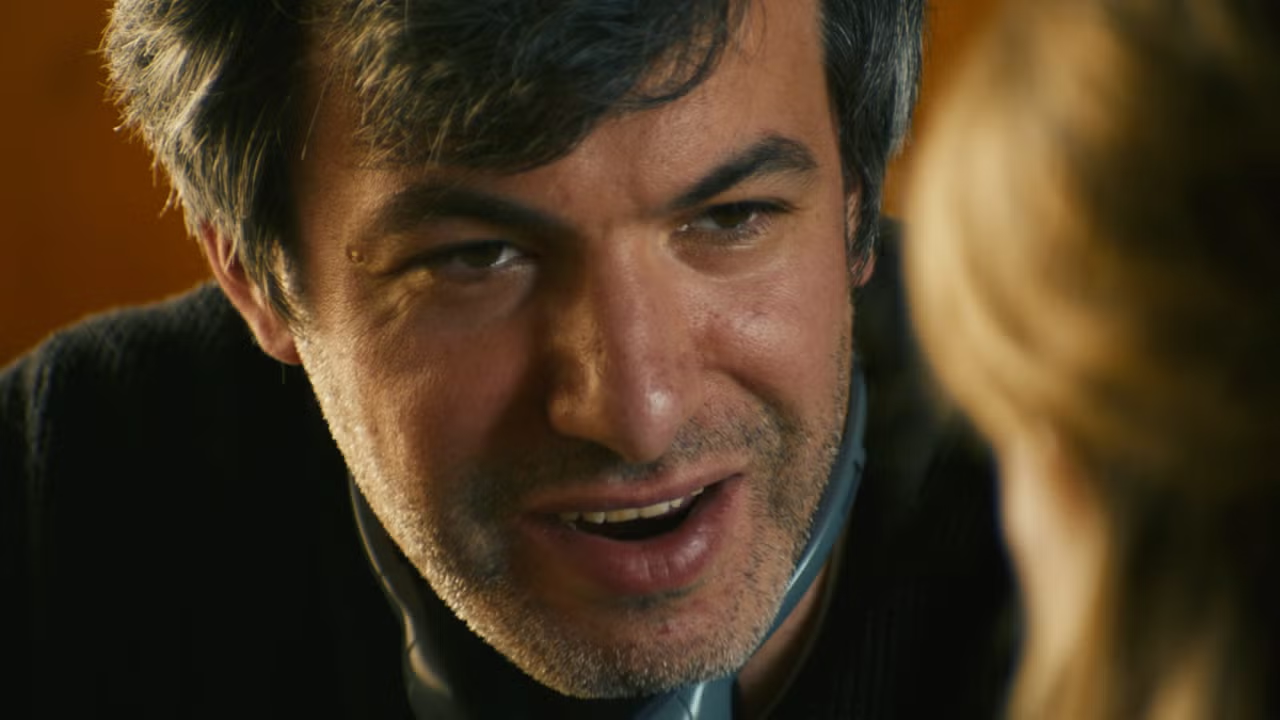
For hardcore Fielder fans, there’s a second movie running underneath. Everyone is busy asking whether Holmes is lying or playing a part for sympathy. The extra question is whether Nathan is doing a bit, too. Fielder has an Andy Kaufman streak, with one major difference: Kaufman’s characters were clearly not Andy, while Fielder’s caricature sits so close to the real Nathan that you can never know when he’s performing. Some of what we see is surely him. But he appears to play a version of himself in everything he makes, and I don’t think a documentary is the exception.
The soft, credulous, slightly smitten Nathan is, I suspect, the performance most likely to get Holmes to drop hers. It’s the “I love you” scene again: a real feeling, exaggerated until it becomes a tool.
So who’s the victim, and who’s pulling the strings? You Can See Everything never settles it, and it’s better for that. Two people sit across from each other, each insisting on their sincerity, each performing it a little too well. Fielder keeps asking for one more answer. Holmes keeps giving it to him.
Maybe that’s why I haven’t stopped thinking about it since. You Can See Everything is less a true-crime documentary than a three-hour game of chicken between two people who never break character. What makes it so compelling is how thoroughly it blurs the line between dramatic portrayal and investigative journalism. For something labeled a documentary, a lot of the people in it seem to be acting.
You Can See Everything opens October 16 from A24.